
Showing posts with label new zealand interest. Show all posts
Showing posts with label new zealand interest. Show all posts
Monday, February 1, 2016


Wednesday, March 4, 2015
BROOKFIELD ROLLER MILLS CHRISTCHURCH SIGN

The Mill still stands on Moorhouse ave near Hagley Park

Thursday, May 30, 2013
RARE BURL MUSK SIDE TABLE, TASMANIA CA 1835


TASMANIA CA 1835 MADE FROM
SOLID MUSK BURL Olearia argophylla.
700mm x 400mm x 500mm
sold thanks Melbourne
Friday, June 15, 2012
NEW ZEALAND FERNWARE TABLE

original condition
sold thanks Auckland

Thursday, May 31, 2012
MEEK'S INK, DISPLAY BOTTLE, CHRISTCHURCH EXHIBITION 1906

over 1 meter tall !
sold thanks Wanaka

Monday, May 28, 2012
INLAID BOX, JEWELL & CO, CHRISTCHURCH

Inlaid in various native timbers including BurrTotara, Fuschia,and Kohekohe CA 1880
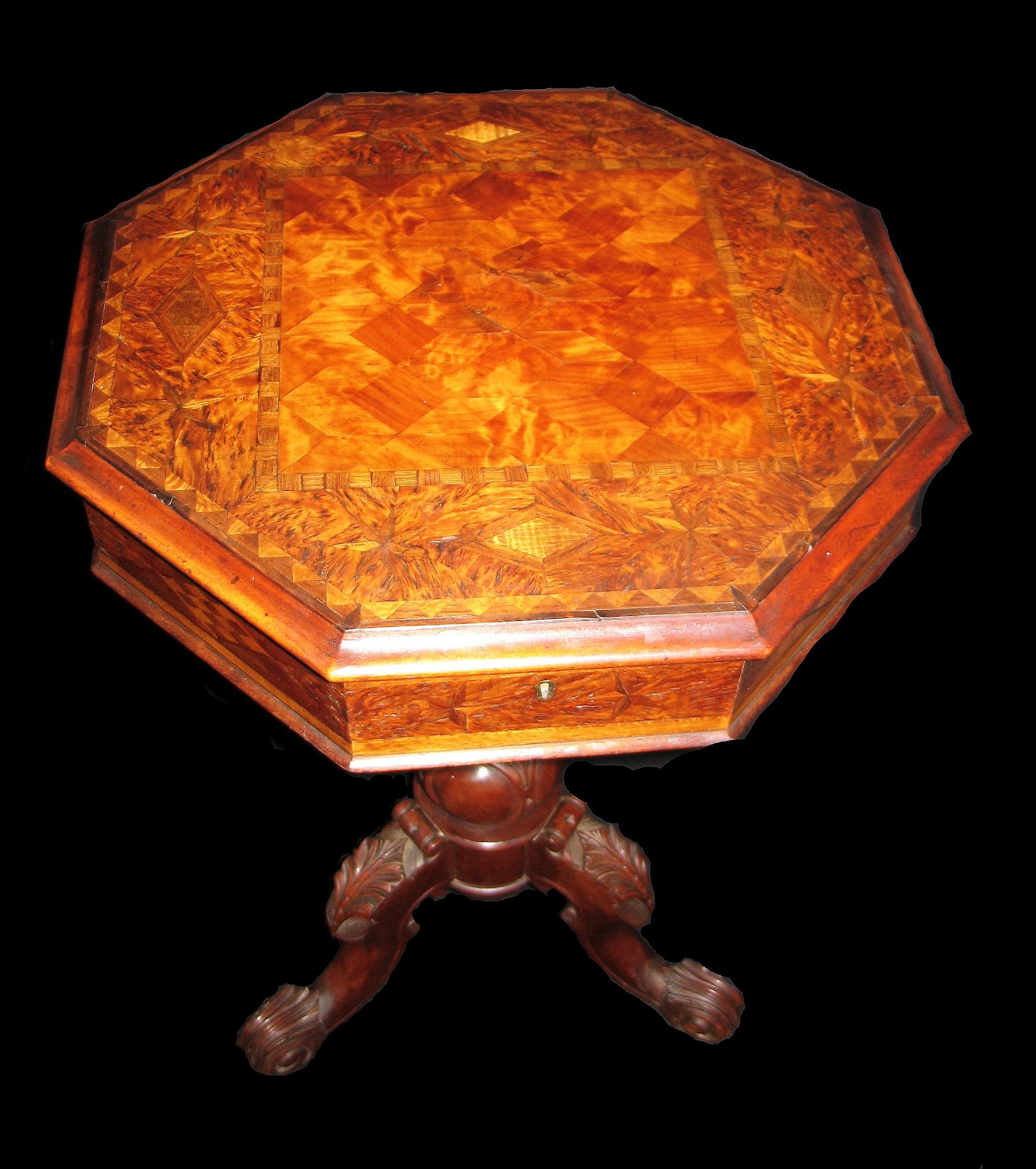
RARE INLAID WORK TABLE BY JEWELL & CO CHRISTCHURCH

sold thanks Wellington
Tuesday, May 15, 2012
"Monika Ruke" ca 1910,

sold thanks Christchurch
Friday, December 3, 2010
3 SILVER AGRICULTURAL MEDALS AWARDED TO SIR HEATON RHODES
3 SILVER AGRICULTURAL MEDALS AWARDED TO SIR HEATON RHODES
 sold thanks Christchurch


Robert Heaton Rhodes was born in New Zealand on 27 February 1861 at Purau, a farming locality on the shore of Lyttelton Harbour.
Heaton Rhodes moved to Christchurch with his parents in 1866, where his father built a large house, Elmwood, on Papanui Road. He attended Mrs Alabaster's school in Cranmer Square.. He was then sent to England About 1880 Rhodes entered Brasenose College in the University of Oxford. Completing his MA in 1887, he was called to the Bar of the Inner Temple, London, but in 1888 returned to New Zealand, where he was admitted as a barrister and solicitor of the Supreme Court in Christchurch.
His father's death in 1884 made him an exceptionally wealthy young man, enabling him to give up the law and adopt a new career as a farmer and country gentleman.
From about 1893 Rhodes bought farmland near Taitapu, nine miles south of Christchurch; the farm eventually comprised some 5,000 acres. Rhodes commissioned Frederick Strouts, architect of his new house at Elmwood (the previous one burned down in 1882), to design a grand country house. The result, completed in 1895, was a three-storeyed 40-room timber and slate house, Otahuna.
Otahuna soon became a popular venue for the garden parties of Canterbury's social élite, and for polo matches, in which Rhodes was a keen and expert participant. But his main preoccupation for the next decade was the design and planting of a large garden.
Heaton Rhodes took a close personal interest in this remarkable garden, and from his intimate knowledge of its shrubs and flowers he became an expert horticulturist, much in demand as a judge at flower shows in Canterbury. He was elected president of the Canterbury Horticultural Society in 1903, and held this post for the next 53 years. Otahuna soon became famous for its fields of daffodils, and on open days between 1928 and 1954 thousands of people visited. Surplus bulbs were donated to the Christchurch Hospital and the Government Domain (later the Botanic Gardens), forming the nucleus of the daffodil beds which now line the Avon River.
Rhodes was highly respected as a model farmer, and was elected president of the Canterbury Agricultural and Pastoral Association for 1896. In 1898 he established the first herd of Norfolk red poll cattle in New Zealand, and championed the merits of this breed so well that he became the first president of the New Zealand Red Poll Cattle Breeders' Association in 1921. Otahuna was also noted for its fine flocks of English Leicester and Corriedale sheep,
In 1920 Rhodes was appointed minister of defence. He was instrumental in helping to establish what became the Royal New Zealand Air Force. Rhodes was also appointed commissioner of state forests in 1922. In these years the foundations were laid for New Zealand's future exotic timber industry.
Rhodes obviously enjoyed the role of benevolent country squire. Each year on prize-giving day he sent buckets of cherries to Tai Tapu School, and on Christmas Day he visited all of his employees on the Otahuna estate, with a leg of lamb for the wives, cash for the men and sweets for the children. Otahuna was the venue for one of Canterbury's first demonstrations of aerial top-dressing
Few New Zealanders have achieved such prominence or popularity, received such high honours, or been more sincerely admired and respected in their own lifetime than Heaton Rhodes. Blessed with intelligence, talent, good looks and wealth, he made the most of his advantages. He excelled at many things, and is remembered in Canterbury as the province's outstanding public figure of this century. Bishop Warren's tribute referred to 'a quality of gentleness and quiet charm,' coupled with friendliness and helpfulness which endeared him to many. Daffodils still bloom at Otahuna, and the house itself remains his most tangible monument.


Robert Heaton Rhodes was born in New Zealand on 27 February 1861 at Purau, a farming locality on the shore of Lyttelton Harbour.
Heaton Rhodes moved to Christchurch with his parents in 1866, where his father built a large house, Elmwood, on Papanui Road. He attended Mrs Alabaster's school in Cranmer Square.. He was then sent to England About 1880 Rhodes entered Brasenose College in the University of Oxford. Completing his MA in 1887, he was called to the Bar of the Inner Temple, London, but in 1888 returned to New Zealand, where he was admitted as a barrister and solicitor of the Supreme Court in Christchurch.
His father's death in 1884 made him an exceptionally wealthy young man, enabling him to give up the law and adopt a new career as a farmer and country gentleman.
From about 1893 Rhodes bought farmland near Taitapu, nine miles south of Christchurch; the farm eventually comprised some 5,000 acres. Rhodes commissioned Frederick Strouts, architect of his new house at Elmwood (the previous one burned down in 1882), to design a grand country house. The result, completed in 1895, was a three-storeyed 40-room timber and slate house, Otahuna.
Otahuna soon became a popular venue for the garden parties of Canterbury's social élite, and for polo matches, in which Rhodes was a keen and expert participant. But his main preoccupation for the next decade was the design and planting of a large garden.
Heaton Rhodes took a close personal interest in this remarkable garden, and from his intimate knowledge of its shrubs and flowers he became an expert horticulturist, much in demand as a judge at flower shows in Canterbury. He was elected president of the Canterbury Horticultural Society in 1903, and held this post for the next 53 years. Otahuna soon became famous for its fields of daffodils, and on open days between 1928 and 1954 thousands of people visited. Surplus bulbs were donated to the Christchurch Hospital and the Government Domain (later the Botanic Gardens), forming the nucleus of the daffodil beds which now line the Avon River.
Rhodes was highly respected as a model farmer, and was elected president of the Canterbury Agricultural and Pastoral Association for 1896. In 1898 he established the first herd of Norfolk red poll cattle in New Zealand, and championed the merits of this breed so well that he became the first president of the New Zealand Red Poll Cattle Breeders' Association in 1921. Otahuna was also noted for its fine flocks of English Leicester and Corriedale sheep,
In 1920 Rhodes was appointed minister of defence. He was instrumental in helping to establish what became the Royal New Zealand Air Force. Rhodes was also appointed commissioner of state forests in 1922. In these years the foundations were laid for New Zealand's future exotic timber industry.
Rhodes obviously enjoyed the role of benevolent country squire. Each year on prize-giving day he sent buckets of cherries to Tai Tapu School, and on Christmas Day he visited all of his employees on the Otahuna estate, with a leg of lamb for the wives, cash for the men and sweets for the children. Otahuna was the venue for one of Canterbury's first demonstrations of aerial top-dressing
Few New Zealanders have achieved such prominence or popularity, received such high honours, or been more sincerely admired and respected in their own lifetime than Heaton Rhodes. Blessed with intelligence, talent, good looks and wealth, he made the most of his advantages. He excelled at many things, and is remembered in Canterbury as the province's outstanding public figure of this century. Bishop Warren's tribute referred to 'a quality of gentleness and quiet charm,' coupled with friendliness and helpfulness which endeared him to many. Daffodils still bloom at Otahuna, and the house itself remains his most tangible monument.
Wednesday, November 10, 2010
PUBLIC SEALS OF NEW ZEALAND, NEW ULSTER AND NEW MUNSTER


With the establishment of New Zealand as a British Crown Colony in 1841, all official instruments of the colonial government were sealed with the Public Seal of New Zealand.
The seal was designed by Benjamin Wyon, Chief Engraver to the Seals. The design depicted Queen Victoria of the United Kingdom in treaty with a group of Māori chiefs.
Seal of New Munster
In 1840 the North Island, South Island and Stewart Island were named New Ulster, New Munster and New Leinster respectively, after provinces in Ireland.
From 1846 New Ulster and New Munster were made provinces. New Munster included all the South Island and the southern part of the North Island.
Seal of New Ulster
In contrast to the south, the northern part of New Zealand, known from 1846 to 1852 as New Ulster, contained many Irish
They formed almost a third of Aucklands population. Many had come across the Tasman Sea from Sydney.
In 1852, the provinces of New Ulster and New Munster were abolished and regional provinces were established.
Seals are cast in vermilion wax and measure 70mm across, contained in a Morocco leather case
sold thanks Washington
Monday, November 1, 2010


Thursday, October 28, 2010


Sunday, October 17, 2010
DE BEER PHOTOGRAPH ALBUM ALGIERS CA 1920


Esmond de Beer and his sisters, Mary and Dora, never married. After their parents died (Emily in 1930, Isidore in 1934) they lived together in London. The sisters had previously travelled between London, Europe and New Zealand. They enjoyed the outdoors. Dora was a mountaineer who made many climbs in the Southern Alps, the Swiss Alps and, in 1938, Yunan, China. Esmond and Mary were pedestrians - indefatigable walkers and trampers. All three regularly holidayed on the Hebridean island of Raasay.
The de Beers were among the most important benefactors of Dunedin’s cultural institutions. Esmond wrote, ‘My sisters and I have always thought of Dunedin as our ‘‘home’’, our essential background, and have wanted to do what we could towards the furtherance of its learning and culture’. All three were collectors: Esmond’s rare books were a scholar’s tool; Dora had a passion for rugs and textiles, often gathered on her travels; Mary loved poetry; all appreciated the visual arts. Many gifts to institutions were in the name of all three.


Thursday, October 14, 2010


CARVED GOURD BY THEO SCHOON


From a Blenhiem collection, same source as my previous one, authenticated by John Perry
Born in Java of Dutch parents in 1915, sent to Holland for classical art education in Rotterdam, Schoon travelled through Europe absorbing all that the new movements could offer. Upon arrival in New Zealand in 1939 he was probably the best educated artist in the country. Schoon was an artist, photographer, potter, sculptor, greenstone carver, designer and an expert art researcher. He developed his knowledge of Maori design by going to the best Maori authorities. Often the only European invited by Maori to show his art and creations on their marae. He became an expert gourd maker. A number of his carved gourds are held in American museums. He researched the few Maori rock drawings that were then known, and began a time-consuming and physically demanding on-the-spot research in often isolated and deep caves. He recorded the rock drawings in his sketches and photographs.
Schoon undertook intense research at the same time, in to Maori design. He assembled the designs recorded by Williams, Augustus Hamilton and J H Menzies from the start of the century, and consulted with Maori elders and Tohunga. Applying aspects of Maori design to his own art, he developed a fern root spiral which became the well-known "koru". Schoon freely admitted he had adapted Maori design & was always free with his gifts to other artists.
for more information
portobello@woosh.co.nz
Monday, August 2, 2010
WA JEWEL AND CO INLAID BOX

native timbers Ca 1880
for more information
portobello@woosh.co.nz
UNIQUE TATTOO FLASH CARDS CA1950


From Emille McSweeny's Tatto Parlour
Manchester Street, Christchurch
Black ink and watercolor,
each measure 12 1/2 inches by 10 inches
I have 24 cards in total
for more information
portobello@woosh.co.nz


Subscribe to:
Posts (Atom)